
Written by Randy Stolp
Walking into America’s Credit Unions Governmental Affairs Conference (GAC) this year felt… familiar.
Not in the “same conference, different year” kind of way. More like running into old friends where the conversation picks up exactly where it left off. No reset needed. No catching up required. Just a quick handshake, a smile, and you’re right back in it.
And yet, for me, it was different.
This was my first GAC attending from the perspective of a startup – closer to independent than part of a larger organization. I expected that to feel different. Maybe even isolating.
It didn’t.
If anything, it made one thing clearer: this movement has always been, and will continue to be, about people first.
What’s fascinating about GAC isn’t just what happens in the sessions – it’s everything happening around them.
The hallway conversations.
The side events.
The “conference outside the conference.”
If anything, that outer layer feels like it’s grown into something just as meaningful as the main event itself.
This was my first year really spending time in those spaces, and it changed how I experienced the week. You start to realize that the real signal isn’t always on stage – it’s in the repeated conversations happening in corners, over coffee, and between meetings.
And when you listen closely enough, patterns start to emerge.
This year didn’t feel like it had one clean theme.
It felt like tension.
Not in a negative way – but in the sense that multiple forces are pulling on the system at the same time.
We talk about collaboration and cooperation more than ever. And yet, at the same time, there’s an undeniable pull toward competition, growth, and differentiation.
We talk about urgency – every year, in fact. The need to move faster. To get things done.
And yet, here we are again – having many of the same conversations, acknowledging many of the same gaps between what needs to happen and what actually does.
We talk about innovation – AI, blockchain, faster payments – but we’re still working through where those things truly fit, and how they connect back to real member needs.
It’s not confusion.
It’s a system in transition.
A few moments from the week have stuck with me.
One was a simple reminder: doing good work doesn’t always mean you’re doing the right work.
Another: don’t preach cooperation and then practice competition.
Those ideas hit differently in the context of everything else happening around us. Because they aren’t just philosophical – they’re practical. They show up in decisions. In partnerships. In whether we choose to build together or build in parallel.
I also kept coming back to something we’ve all felt for years now: the push for urgency.
We say it every year. We feel it every year.
But there’s still a gap between recognizing urgency and acting on it.
And maybe that’s the real work ahead – not just moving faster, but aligning around how we move forward together.
There was also a noticeable shift in how emerging technologies are being talked about.
Not with hype. Not with dismissal.
But with curiosity – and, at times, tension.
Stablecoins described as “casino chips” in one conversation… and then, in another, real initiatives being announced and built.
Questions about whether members are actually asking for these solutions… alongside conversations about infrastructure that could fundamentally change how we move money, manage liquidity, and work across institutions.
It feels like we’ve moved past whether these technologies matter.
Now we’re working through what they mean in practice – and who we want to be as we adopt them.
And through all of it, one thing stood out more than anything else:
The people.
The conversations about technology were interesting. The strategic discussions were important. But what made the week meaningful were the moments in between.
Reconnecting with people you haven’t seen in a year and realizing nothing’s changed.
Meeting new people and feeling like you’ve known them longer than you have.
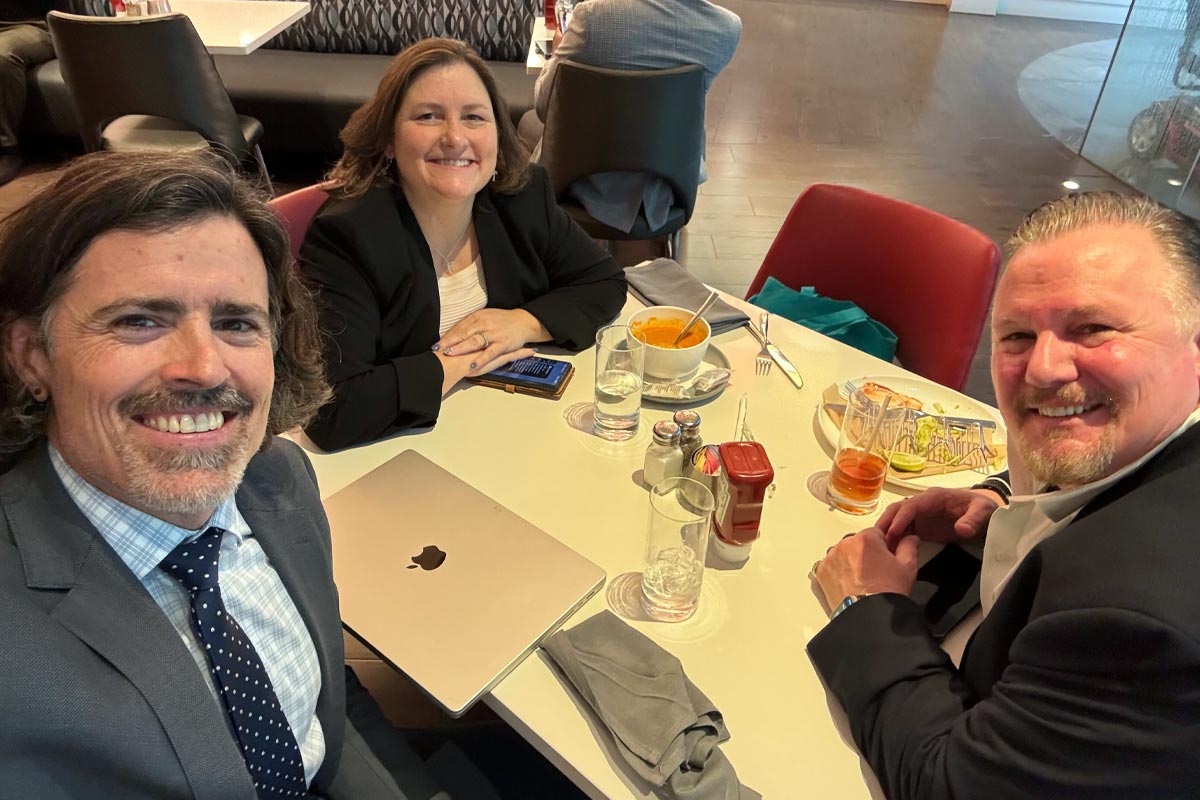
Sitting down with teammates and recognizing, “this is real – we’re actually building something together.”
Those moments matter.
Because at the intersection of all of this – AI, blockchain, faster payments, innovation – there’s something that doesn’t change:
Human understanding.
Empathy.
Trust.
Not as soft concepts.
As infrastructure.
For me, GAC wasn’t about one big takeaway.
It was about a growing realization.
We don’t have a shortage of ideas.
We don’t have a shortage of technology.
And we certainly don’t have a shortage of people who care deeply about this movement.
What we have is a gap.
Between urgency and action.
Between collaboration as a value and collaboration as a behavior.
Between recognizing the need to evolve – and actually doing it together.
If there’s one thing I’m leaving GAC with, it’s this:
The future of this movement won’t be defined by who builds the most.
It will be defined by who chooses to build together – and has the courage to follow through on it.